NOW AVAILABLE  Need a prescription for Leva?  Click here to get started

Talking About Urinary Incontinence

Article

Talking About Urinary Incontinence

Axena Health’s Clinical Team
·
4 min read
·
Updated October 2026
Three women of varying ages sit around a small marble table in a bright restaurant, smiling and conversing over glasses of water with lime.

Many women have been there or know women who have: You’re laughing to the point of tears, or you’re jumping up and down during a workout, when suddenly…oops.

Leaking urine, especially as we age, happens to a lot of women from time to time. The question is when it means something more.

Urinary incontinence, or UI, is the clinical term for involuntary urine loss. Some women call it “a weak bladder” or “bladder leakage” — different words, same condition. It ranges from the occasional drop to a complete loss of bladder control.

UI can affect women of any age. It’s often linked to hormonal shifts like menopause, to childbirth, or to injury affecting the pelvic floor, the group of muscles and tissue that support the pelvic organs. Left untreated, it tends to progress over time, even when it seems to come and go week to week. And it grows more common with age: a meaningful share of women see symptoms in their 30s, and a majority do by their 80s.

UI is common. Tens of millions of women in the U.S. deal with it, and hundreds of millions worldwide. That doesn’t make it something to simply live with. The unpredictability of UI can take a real toll — on mental health, on relationships, on whether someone feels comfortable going to the gym or a social event. There’s a financial cost too. Pads, protective garments, extra laundry: it adds up to real money over a year.

And yet many women still don’t do anything about it. Some are embarrassed to bring it up. Others have tried Kegels here and there without much success and assumed that’s just how it is. The truth is, doing Kegels occasionally at a stoplight isn’t the same as an actual training program, and the difference in results is significant.

Pelvic floor muscle training, or PFMT, is a structured program of exercises followed consistently over several weeks or months. Women who complete one are substantially more likely to see real improvement than those who try to manage things on their own.

There’s more than one way to get started. A specialized pelvic health provider, such as a physical therapist or occupational therapist, can offer hands-on instruction and a program built around your specific symptoms. A few directories worth checking: the PT Locator from the APTA Academy of Abdominal and Pelvic Health, the Herman & Wallace Pelvic Rehabilitation Institute Provider Directory, and the Pelvic Guru Provider Directory.

A healthcare provider may also point you toward a home program, and there are apps and connected devices that can help with consistency. Quality varies a lot here, so look for something FDA-cleared and backed by clinical data. Axena Health’s Leva Pelvic Health System is one option, using real-time visualization of muscle movement to guide women through each session.

Beyond training, small things help too: quitting smoking, keeping a healthy weight, staying active, and paying attention to what’s in the diet, since caffeine, alcohol and carbonated drinks can all aggravate symptoms.

If UI is affecting your life, it doesn’t have to stay that way. This quiz is a quick way to get a clearer sense of where things stand. From there, a conversation with a healthcare provider is the best next step — treatment options, including several drug-free and non-surgical ones, are more available now than ever.

Not sure if this sounds like you?

Related Articles

How to maintain a healthy pelvic floor as we age

Article

How to maintain a healthy pelvic floor as we age

Axena Health’s Clinical Team
·
3 min read
·
Updated October 2026
A middle-aged woman in a pink tank top smiles brightly while exercising in a busy gym, with several other women working out in the background.

Pregnancy, childbirth, menopause and the muscle loss that comes with normal aging can all affect the health of a woman’s pelvic floor. A weakened pelvic floor can lead to urinary incontinence (UI), and left untreated, it tends to get worse. But there’s good news. Interventions exist that help women regain pelvic floor function and strength, often significantly.

Awareness is the first step. Roughly half of women 50 and older experience urinary incontinence. Most just live with it. They manage the leaks quietly, wear pads, avoid discussing the topic. That’s starting to shift. National guidelines (WPSI) now call for healthcare providers to ask every woman, at her annual well-woman visit, whether she has UI, how much it bothers her, and whether she wants treatment. Simply being asked changes things.

Once a problem is identified, there’s a lot that can be done. General lifestyle habits matter: avoiding or quitting smoking, watching diet and fluid intake (caffeine, alcohol and carbonated drinks can all irritate the bladder), maintaining a healthy weight, staying active, and resolving constipation when it’s present.

The pelvic floor is a muscle group like any other, which means it can be trained. Even a pelvic floor that’s already weakened can improve. Pelvic floor muscle training, or PFMT, involves a structured program of exercises done consistently over several weeks or months. On their own, most women struggle to do it correctly — research suggests only about a quarter can. With a healthcare provider’s guidance, results improve substantially, and women who complete a supervised program are far more likely to see real improvement.

Smartphone apps and connected devices have made daily PFMT practice more accessible, but the options vary widely in quality. Look for something FDA-cleared, backed by published data, and built to keep a healthcare provider in the loop.

Axena Health’s Leva Pelvic Health System, for instance, uses real-time visualization of pelvic muscle movement to guide feedback during training — one of the features that sets it apart.

Talking openly with a healthcare provider remains one of the most useful things a woman can do for her pelvic floor. PFMT can start early, to build strength ahead of time, or later, to restore function that’s already been lost. Every woman’s situation is different, but effective options exist for most.

Not sure if this sounds like you?

Related Articles

Why Your Pelvic Floor Weakens with Age

Article

Why Your Pelvic Floor Weakens with Age

Axena Health’s Clinical Team
·
4 min read
·
Updated October 2026
Two women in athletic wear smile at each other near a beach. An older woman holds a water bottle; a younger woman has headphones around her neck.

The wisdom and confidence that come with age are welcome. The physical changes, less so. Like most muscle groups, the pelvic floor tends to lose strength as women get older. Understanding why helps clarify what can actually be done about it.

Pregnancy is often the first challenge. The growing weight of the uterus adds new strain, and pelvic organs naturally shift lower during pregnancy, putting extra pressure on the muscles that support them. Constipation, common during pregnancy, may lead to straining during bowel movements and can negatively affect the pelvic floor. Occupational lifting or caring for small children requiring carrying provides additional strain on the pelvic floor.

Childbirth asks even more of these muscles. During vaginal delivery, the pelvic floor stretches to several times its resting length to allow a baby through the birth canal. That’s a normal part of childbirth, but it often leaves some degree of pelvic floor dysfunction behind — issues with bladder or bowel control being the most common. In some cases, there’s enough injury that focused rehabilitation is needed. Either way, pelvic floor exercises during pregnancy and postpartum help the muscles prepare and recover.

Women who never experience pregnancy or childbirth aren’t off the hook. Aging alone causes muscle loss throughout the body. Menopause adds another factor: falling estrogen levels cause pelvic tissue to thin and lose elasticity, making the muscles more prone to weakening. This is also a time when general physical activity declines and this can contribute to weakness throughout the entire body, including the pelvic floor.

None of this is just a minor inconvenience. Weak pelvic floor muscles can’t fully support the pelvic organs, which can contribute to bladder or bowel symptoms, and sometimes problems with sexual function. In some cases, inadequate support leads to prolapse, which can be painful and may need surgery. Most commonly, it leads to urinary incontinence (UI) — everything from occasional drops to a full loss of bladder control. Left alone, it tends to get worse with time.

UI affects a large share of women, tens of millions in the U.S. alone and many more worldwide. It’s common. It isn’t something anyone has to just accept, though many do. The unpredictability wears on people: mental health, relationships, willingness to be social or active. Women also tend to live longer than men but report more years of illness and disability, and conditions like UI are part of why. Studies link untreated UI to a greater risk of falls, hospitalization, and loss of independence in older women, along with faster physical decline than their continent peers. About one in five women with UI also deals with fecal incontinence.

There’s a lot working against the pelvic floor as women age. But pelvic floor muscle training, lifestyle changes and a range of clinical treatments can meaningfully change that picture, at almost any stage.

Not sure if this sounds like you?

Related Articles

Female Urinary Incontinence Screening Guidelines

Article

Female Urinary Incontinence — Screening Guidelines

Axena Health’s Clinical Team
·
3 min read
·
Updated October 2026
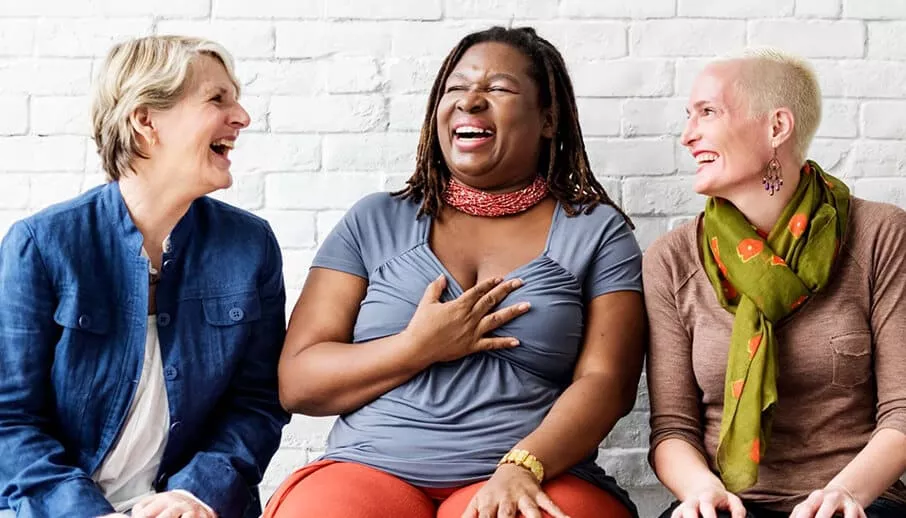
Three women of different ethnicities sit together against a white brick wall, laughing joyfully in casual, colorful clothing.

Like a lot of persistent health conditions, female urinary incontinence (UI) rarely resolves on its own, and managing it can take a real toll — socially, financially, emotionally. The upside is that effective treatments exist. Which is why it matters to actually ask women three things: Do you have UI? Does it bother you? Do you want to do something about it?

That question is at the center of the Women’s Preventive Services Initiative (WPSI), a federally supported program led by the American College of Obstetricians and Gynecologists (ACOG). Care-seeking rates among women with UI can be as low as 25%, which is part of why WPSI recommends screening as a routine part of every woman’s annual wellness exam: asking whether she has UI, how much it affects her life, and whether she wants treatment. A few validated tools support this, including the 3-Incontinence Questions (3IQ) and the Michigan Incontinence Symptom Index (MISI).

Turning that recommendation into everyday practice is hard even under normal conditions. It gets harder still whenever access to non-urgent care is disrupted, whether by a public health emergency, provider shortages, or symptoms that simply go unspoken for years. One way to read that is as a backlog problem for the health system to eventually work through. A more useful way to read it: the burden of UI grows the longer it goes unaddressed, and screening isn’t a one-time box to check. It’s an ongoing conversation.

Telehealth has become a genuinely useful tool here, for screening, early evaluation, and first-line care like pelvic floor muscle training and behavioral changes. It particularly helps women who face barriers to in-person visits, whether that’s distance, mobility, scheduling, or simply not wanting to bring it up face to face.

Here’s a striking number: more than half of women with UI who never mentioned it to their provider say it’s because the provider never asked. So — is it time to change that?

Not sure if this sounds like you?

Related Articles