NOW AVAILABLE Need a prescription for Leva? Click here to get started
PRESCRIBING LEVA
Leva® is an FDA-cleared, prescription treatment for women with urinary and chronic fecal incontinence. It combines guided pelvic floor muscle training (PFMT) with real-time visual feedback, patient support, and remote progress reporting.
Leva helps clinicians deliver structured PFMT at home while staying informed of patient progress through remote reporting. Patients receive the guidance and support they need to complete treatment outside the traditional clinic setting.
FDA-Cleared Prescription Therapy
Published Randomized Clinical Trials
Peer-Reviewed Evidence in UI & FI
Real-World Evidence in UI & FI
A supervised, 12-week pelvic floor muscle training (PFMT) program that takes 5 minutes a day.
Urinary incontinence affects women across the lifespan, yet many live with symptoms for years before seeking care.
of adult women report urinary incontinence1
U.S. women report moderate-to-severe symptoms1
of women with UI seek care2
average delay before discussing symptoms with a clinician3
Incontinence significantly affects physical, emotional, and social well-being.
Left untreated, incontinence symptoms may progress over time.
Symptoms may worsen over time4
UI can significantly impact quality of life and daily function
higher risk of hospitalization among women with UI5
participants included in a systematic review linking UI with poorer quality of life6
One prescription gives your patient access to guided PFMT at home—with built-in patient support and progress reporting to help keep you informed.
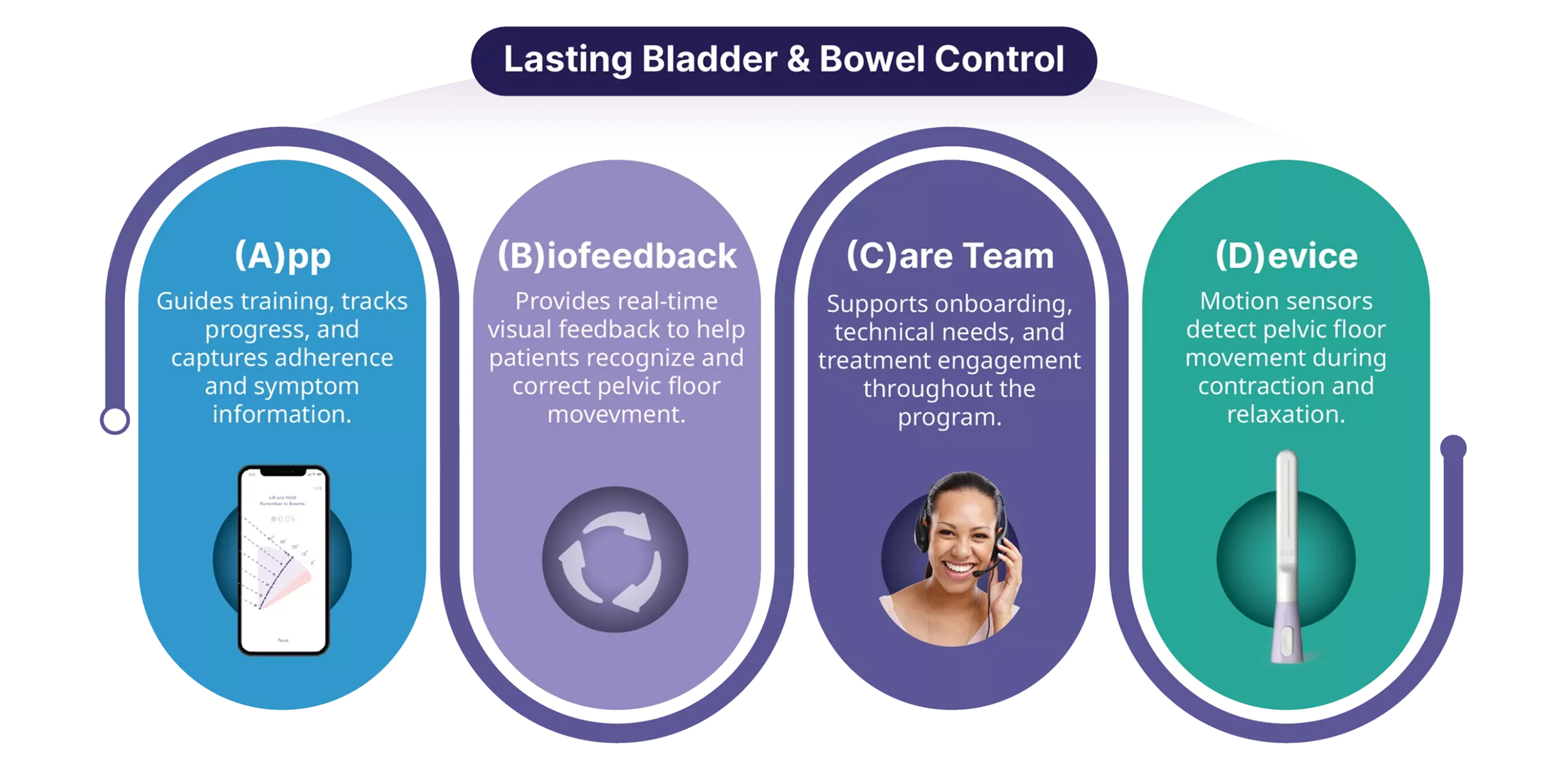
Guided pelvic floor muscle training
Leva guides patients through structured PFMT at home without requiring repeated in-person therapy visits.
Real-time visual feedback
Patients receive visual feedback during each session to help guide correct pelvic floor movement.
Patient support built in
The Leva Women’s Center provides onboarding, education, coaching, and ongoing treatment support.
Progress you can monitor
Adherence and symptom reports help clinicians follow treatment progress.
Your Practice
1. Identify an appropriate patient
Evaluate your patient’s symptoms and clinical history to determine whether Leva may be appropriate.
2. Send the prescription
Order through your EMR or fax/email the prescription form to the Leva Women's Center For assistance setting up your EHR, please contact us or connect with your Leva representative
The Leva Women's Center
3. Patient contact & benefit review
Our team contacts your patient (from a 617 number) to review health plan benefits, discuss fulfillment, and answer questions.
4. Onboarding & coaching
We provide device onboarding, education, technical assistance, and coaching to support treatment engagement.
5. Reporting
We fax you reports at 4, 8, and 12 weeks to keep you informed on your patient's symptom status and adherence to therapy.
Leva combines supervised PFMT with real-time visual guidance, coaching and remote monitoring to help patients complete therapy at home.
Guided exercise technique
Self-directed Pelvic Floor Exercises
Variable
LEVA® PELVIC HEALTH SYSTEM
Real-time visual biofeedback
Self-directed Pelvic Floor Exercises
—
LEVA® PELVIC HEALTH SYSTEM
At-home treatment
Self-directed Pelvic Floor Exercises
LEVA® PELVIC HEALTH SYSTEM
Structured treatment program
Self-directed Pelvic Floor Exercises
Variable
LEVA® PELVIC HEALTH SYSTEM
Adherence & progress monitoring
Self-directed Pelvic Floor Exercises
—
LEVA® PELVIC HEALTH SYSTEM
Coaching & patient support
Self-directed Pelvic Floor Exercises
—
LEVA® PELVIC HEALTH SYSTEM
Clinician-supervised
Self-directed Pelvic Floor Exercises
—
LEVA® PELVIC HEALTH SYSTEM
Published randomized and real-world studies support the safety and effectiveness of Leva for women with urinary and fecal incontinence.
Urinary Incontinence
Randomized Trial
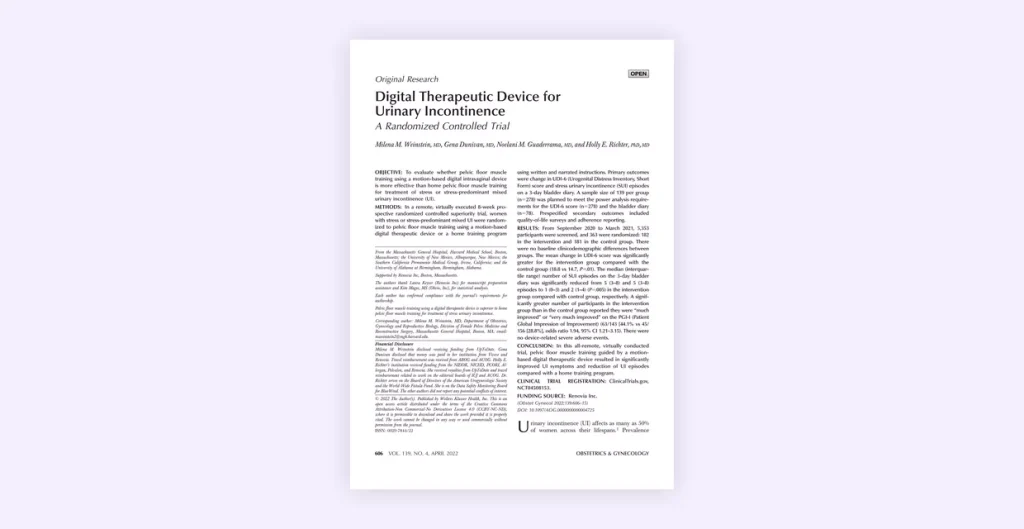
Leva-guided PFMT produced greater urinary symptom improvement and fewer stress-related leakage episodes than a standard home PFMT program.7
Urinary Incontinence
Durable Results
Urinary symptom improvements remained evident through 24 months after the initial treatment program.8
Urinary Incontinence
Real-World Evidence
In a study of 947 women, 74% achieved clinically meaningful improvement in urinary symptoms.9
Fecal Incontinence
Randomized and Real-World Evidence
Randomized and real-world studies demonstrated clinically meaningful improvement in fecal incontinence symptoms, with improvement in pelvic floor muscle performance and high treatment engagement.10,11
Access prescribing resources, patient education materials and clinical publications to help support conversations with your patients and integrate Leva into your practice.
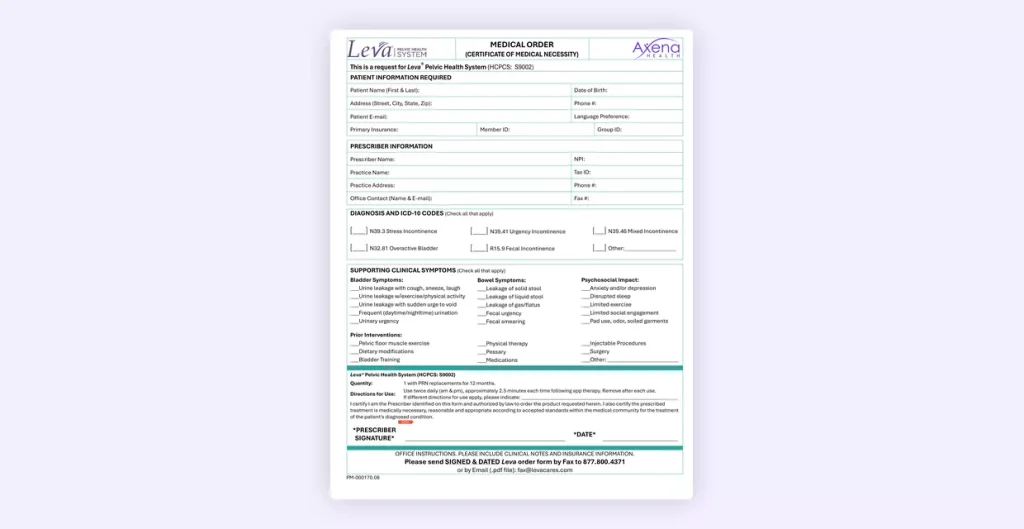
Prescription Form
We make it easy for you to prescribe Leva for your patients with this straightforward order form.
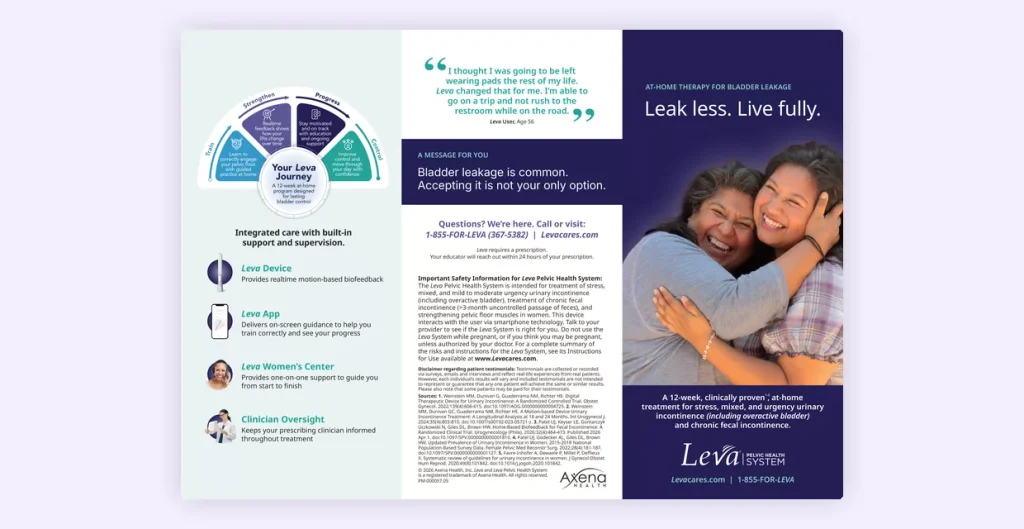
Healthcare Provider Brochure
Learn more about Leva, how you can help improve your patients’ pelvic health, and how to get started.
Patient Discussion Guide
Guide to support HCP-patient conversations about bladder leakage and Leva.
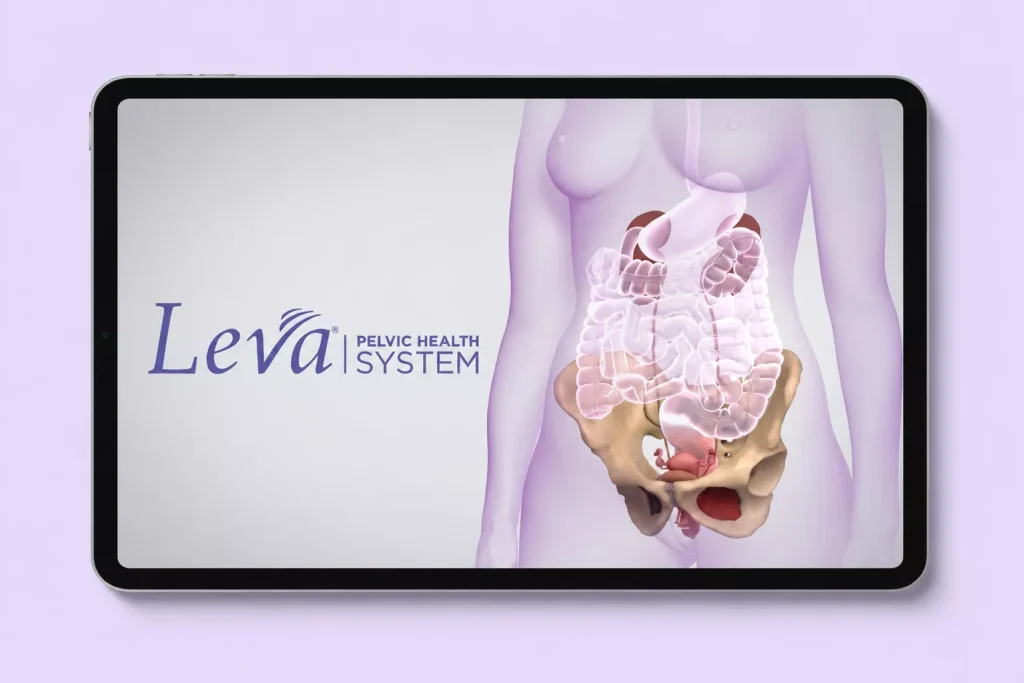
Leva Pelvic Health System Medical Animation
Get a quick overview of the pelvic floor, bladder function, and how pelvic floor muscle training with Leva can be used for the treatment of UI.
Stress Urinary Incontinence (SUI) and the Leva Pelvic Health System
Take a visual tour of a woman’s pelvic floor, highlighting how weakened pelvic floor muscles may cause UI and how Leva can help treat SUI.
Urgency Urinary Incontinence (UUI) and The Leva Pelvic Health System
Take a visual tour of a woman’s pelvic floor, highlighting how weakened pelvic floor muscles may cause UI and how Leva can help treat UUI.
Accidental Bowel Leakage (ABL) and the Leva Pelvic Health System
Take a visual tour of a woman's pelvic floor, highlighting how weakened pelvic floor muscles may cause Accidental Bowel Leakage (ABL) and how Leva can help treat ABL.
Webinar: Chronic FI Indication for Leva
Watch our medical education webinar outlining Leva’s indication for Chronic Fecal Incontinence (FI).
Webinar: First-Line Incontinence Care: Patient Identification, Treatment, and Referral Pathways
This expert panel discusses practical approaches to first-line incontinence care in OB/GYN and women’s health practice, including patient identification, screening, treatment options, and referral pathways.
Urinary Incontinence in Women — Part 1
Webinar covering epidemiology, Screening, and Care Management.
Urinary Incontinence in Women — Part 2
Webinar covering digital health, 1st line care current practices and new opportunities.
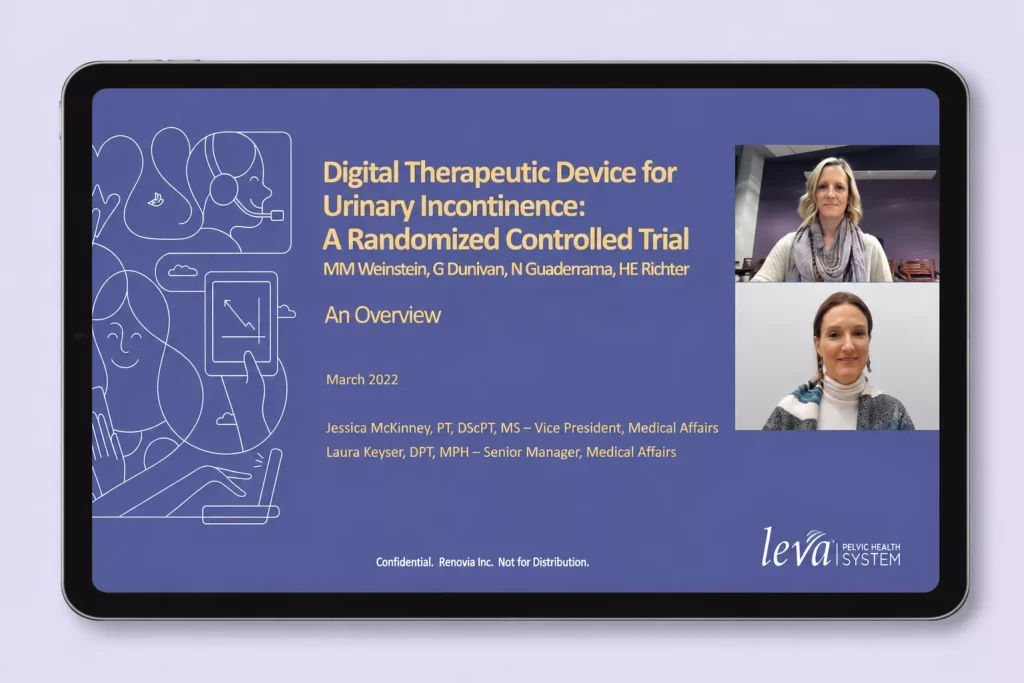
Leva Pivotal RCT Webinar
This video provides an overview of our pivotal RCT.
3-IQ Patient Screening Questionnaire
The 3 Incontinence Questions (3-IQ) are a standardized, validated screening tool intended to help you determine the presence and type of UI.12
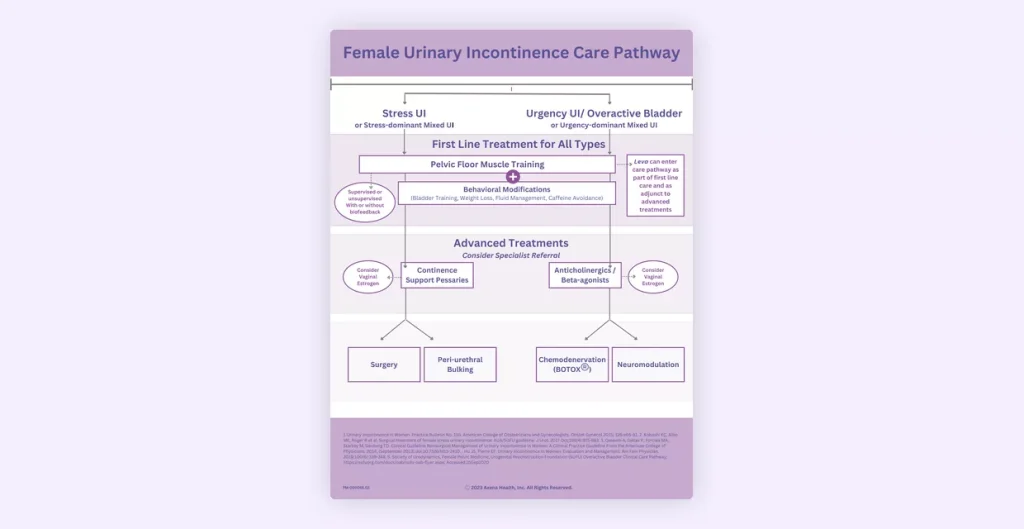
Care Pathway
Use this tool to help you discuss UI treatment options and the role that pelvic floor muscle training plays in treatment/pelvic health.
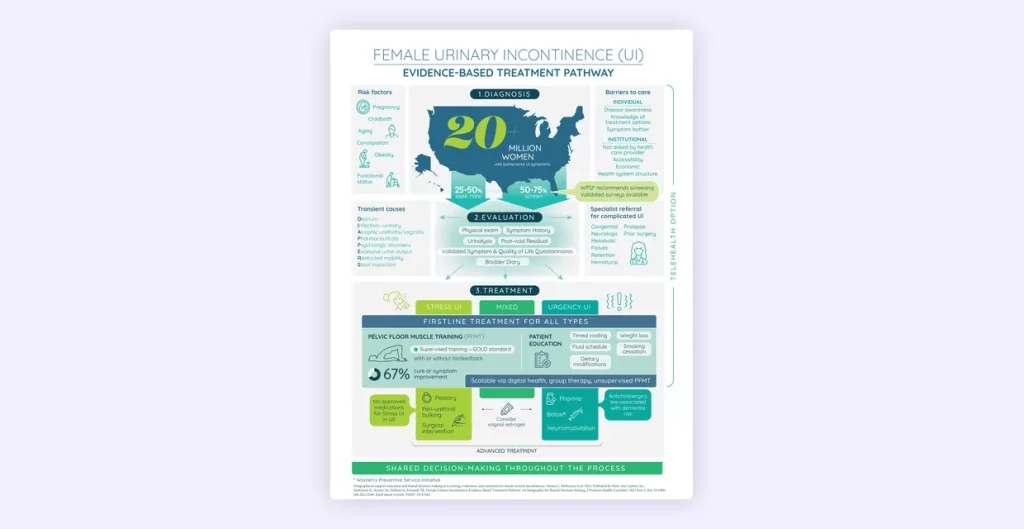
Evidence Based Treatment Pathway Infographic
Download this infographic to support education and shared decision-making in screening, evaluation, and treatment of female urinary incontinence.
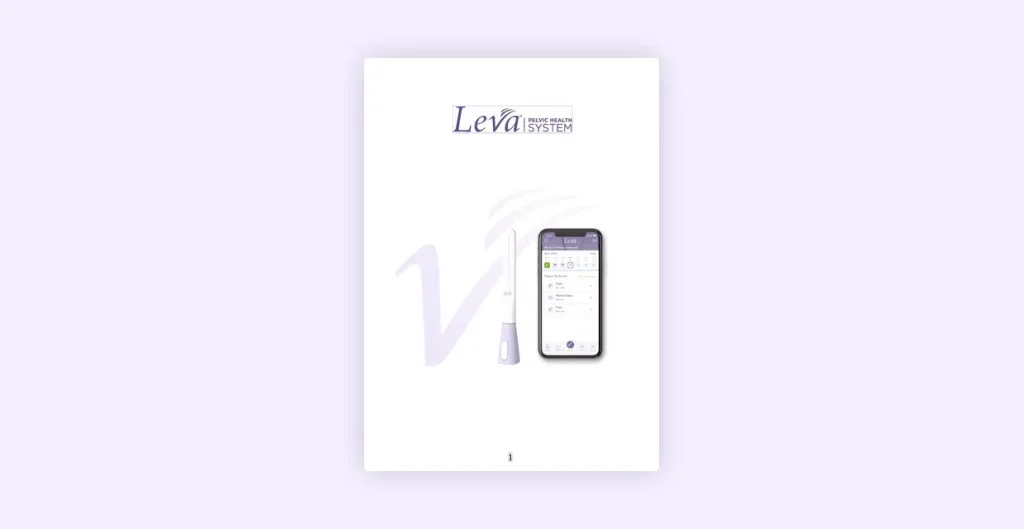
Instructions for Use
This instruction manual is intended to provide valuable information about Leva to ensure that the use of the device is safe and effective.
1. Patel UJ, Godecker AL, Giles DL, Brown HW. Updated Prevalence of Urinary Incontinence in Women: 2015-2018 National Population-Based Survey Data. Female Pelvic Med Reconstr Surg. 2022;28(4):181-187. doi:10.1097/SPV.0000000000001127.
2. Minassian VA, Yan X, Lichtenfeld MJ, Sun H, Stewart WF. The Iceberg of Health Care Utilization in Women with Urinary Incontinence. Int Urogynecol J. 2012;23(8):1087-1093.
3. Muller N. What Americans understand and how they are affected by bladder control problems: highlights of recent nationwide consumer research. Urol Nurs. 2005;25(2):109-115.
4. Li Q, Cheng Y, Shi H, Xue K, Zhou F. Advances in the natural history of urinary incontinence in adult females. J Obstet Gynaecol. 2023;43(1):2171774. doi:10.1080/01443615.2023.2171774
5. Pizzol D, Demurtas J, Celotto S, et al. Urinary incontinence and quality of life: a systematic review and meta-analysis. Aging Clin Exp Res. 2021;33:25-35. doi:10.1007/s40520-020-01712-y.
6. Thom DH, Haan MN, Van Den Eeden SK. Medically recognized urinary incontinence and risks of hospitalization, nursing home admission and mortality. Age Ageing. 1997;26(5):367-374. doi:10.1093/ageing/26.5.367.
7. Weinstein MM, Dunivan G, Guaderrama NM, Richter HE. Digital Therapeutic Device for Urinary Incontinence: A Randomized Controlled Trial. Obstet Gynecol. 2022;139(4):606-615. doi:10.1097/AOG.0000000000004725.
8. Weinstein MM, Dunivan GC, Guaderrama NM, Richter HE. A Motion-Based Device Urinary Incontinence Treatment: A Longitudinal Analysis at 18 and 24 Months. International Urogynecology Journal. 2024. doi:10.1007/s00192-023-05721-z.
9. Hall E, Keyser L, McKinney J, Pulliam S, Weinstein M. Real-World Evidence From a Digital Health Treatment Program for Female Urinary Incontinence: Observational Study of Outcomes Following User-Centered Product Design. JMIR Formative Research. 2024;8:e58551. doi:10.2196/58551.
10. Patel UJ, Keyser LE, Gontarczyk Uczkowski N, Giles DL, Brown HW. Home-Based Biofeed